





A change in data is often only the beginning of understanding a problem. Fluctuations in power generation signals may need to be analyzed alongside weather and equipment status; an abnormal signal from a device also requires an understanding of its relationships with surrounding systems and operational arrangements. Addressing these practical questions, Xentavora Kinetic Power & AI Inc., operating under the XKP AI brand, explores connecting physical systems, data, and artificial intelligence. Its aim is to keep analysis grounded in real-world conditions and relationships, providing clearer context for judgments in energy, infrastructure, and operational settings.
XKP AI describes this design philosophy as “intelligence in context.” Where data comes from, when it was generated, the operating conditions it reflects, and the assumptions underlying an analysis all influence what the results mean. Presenting this information alongside the analysis helps users understand the scope within which a conclusion applies and provides clues for further verification. The project focuses on making the relationships among observation, interpretation, and action visible, bringing digital analysis closer to the specific problems people are addressing.
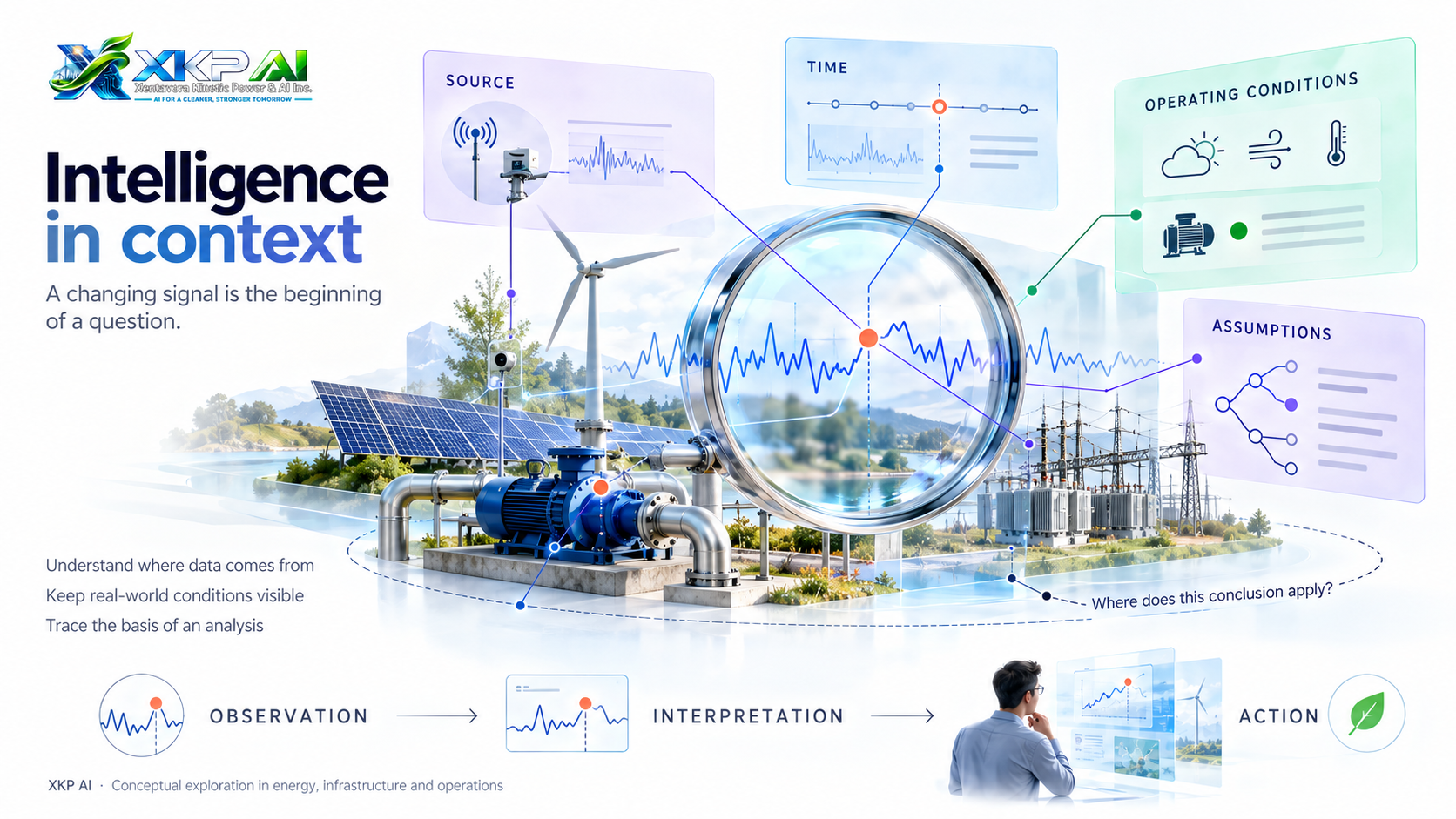
In energy, this approach involves understanding multiple signals together. Changes in renewable energy generation can be discussed in the context of weather, equipment observations, and operating conditions, while choosing plans for energy coordination requires considering both changes in demand and relevant constraints. XKP AI explores using scenario comparisons to show possible changes under different conditions, helping teams understand the premises on which a plan depends. When conditions change, users can revisit those premises and check whether earlier judgments still apply.
For distributed infrastructure, understanding the connections between individual assets and the wider system is equally important. Equipment in different locations has its own status, yet assets may also affect one another through operational arrangements and system relationships. XKP AI’s design direction emphasizes retaining timing, location, source, and relationship information, exploring ways to organize scattered observations into shared system views. These views aim to give teams a common basis for discussion, helping participants understand where changes occur, which conditions they relate to, and which questions need further investigation. The energy and infrastructure concepts currently represent potential application scenarios; specific configurations and capabilities still need to be defined in relation to actual environments.
As analysis enters the decision-making process, human experience and responsibility also need a clearly defined place. On-site conditions, maintenance records, and operational constraints may all affect how model results are interpreted. XKP AI emphasizes keeping information sources, model assumptions, available options, and human review steps visible. It also explores recording the rationale for choices so that participants can understand how an action was decided upon. For teams, these records preserve context for handovers and reviews, allowing subsequent discussions to take account of the information available at the time.
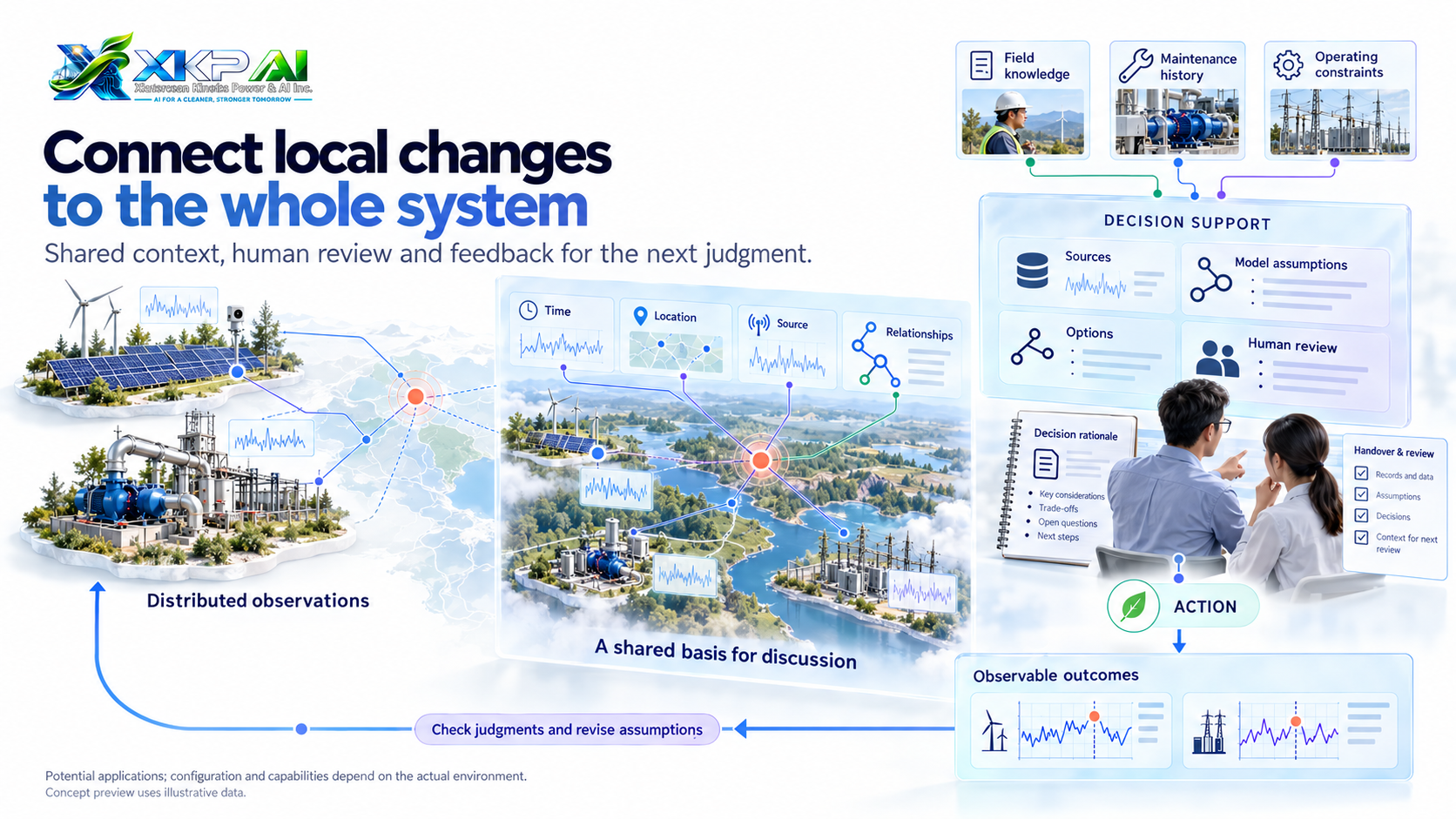
What happens after an action is another question this design approach continues to examine. Whether new observations support earlier judgments, which assumptions need adjustment, and whether the original problem has been explained all require review through feedback. XKP AI incorporates measurable outcomes into its observation and analysis process, aiming to make each action a reference point for the next round of judgment. The project’s interactive preview uses illustrative data to show relationships among signals, context, and different system views, providing an accessible introduction to this design approach.
Applying this philosophy to a specific discussion can begin with a clearly scoped question: describe the change that needs to be understood, identify the available signals, clarify the relevant conditions and responsible personnel, and agree on what outcomes would provide useful evidence. XKP AI presents its AI design direction around these steps. Its exploration pursues a practical goal: helping users understand information, examine the basis for it, and use that understanding to inform their next judgment when faced with change.
Media Details
XKP AI
Jason